
Sullivan County Civil Docket Searches
Begin with Indiana MyCase. On the Name tab, a last name is the main field; first name, middle name, date of birth, or business name can narrow the list. The Case tab takes one identifier at a time: a case number, citation number, or cross-reference number. Pick Sullivan County in the Court menu, then Civil, Family, or Probate when the matching category appears. Open the Case Summary next. Confirm the court and the full number. Sullivan Circuit Court and Sullivan Superior Court share some civil work, though other case families stay with one court. Status and filing-date filters can trim a broad docket search. Expect a captcha on MyCase now and then. Results cap at 1,000.
- Select the Name or Case tab.
- Choose Sullivan County and the likely category.
- Enter the party name, business name, or one case identifier.
- Open a matching Case Summary.
- Confirm the court, case code, status, and latest CCS entry.
- Ask the Clerk for a complete or certified record.
When the online docket falls short, call the clerk. Tonya Bedwell, Sullivan County Clerk, sits at 100 Courthouse Square, Room 304, Sullivan, Indiana 47882. The office phone is 812-268-4657. A counter, phone, or mailed request should name the party, the court, the case number if known, the filing range, and the exact item sought. The county Document Center is not a civil case search. It covers county-government publications.
Sullivan Civil Court Assignment
The Sullivan local rules effective February 28, 2025 put court assignment at the center of civil research. Most civil cases are concurrent. The Clerk assigns them to Circuit or Superior through a 50:50 random draw. Companion civil cases follow the first case filed. A refiled matter goes back to the court that dismissed it. A judge may also transfer a case by order.
| Case family | Local court route |
|---|---|
| General civil matters | Concurrent Circuit or Superior assignment. |
| Small claims | Exclusive to Sullivan Superior Court. |
| Probate, guardianship, adoption | Generally exclusive to Sullivan Circuit Court, subject to the stated Hawkins Law Firm exception. |
| Hawkins Law Firm civil filings | Assigned to Sullivan Superior Court under the local exception. |
| Dissolution and legal separation | Concurrent assignment, with related-case rules relevant. |
| Juvenile and mental-health matters | Circuit route, with strong confidentiality limits. |
That split is why a one-court search can miss a Sullivan County civil docket. There is no separate city court file. The current Indiana directory lists no municipal or town court in Sullivan County.
Civil Dockets: What They Show
The Chronological Case Summary, or CCS, lists civil events in date order. Its header carries the case number, court, type, filing date, status, flags, and related references. Below that, the events can include complaints, appearances, service, answers, motions, hearings, orders, judgments, transfers, dismissals, and closure. A document icon signals a public online copy. No icon does not mean the filing is missing.
| Filing data | Filed by, filed against, action type, remedies sought, date, and event description where public. |
|---|---|
| Service | Requested party, service status, served date, response due, method, return, and comments. |
| Hearings | Date, reason, session, judicial officer, result, and cancellation fields when entered. |
| Judgments | Award, status, awarded to and against, record-book fields, and comments. |
| Financial data | Fees, payments, credits, and a web balance that may lag the Clerk's accounting. |
Context matters when you read each event. A motion asks the court to act; it is not a ruling. A canceled setting is not a dismissal. The judgment field may state an award, but the public order and later entries show its true status.
Sullivan Civil Docket Codes
Indiana Administrative Rule 8 builds case numbers from four parts. Sullivan Circuit begins 77C01. Sullivan Superior begins 77D01. The second group gives the filing year and month. The third names the case type, and the last is a six-digit sequence. So 77C01-2503-PL-000001 reads as a March 2025 civil plenary filing in Circuit.
- PL
- Civil plenary, a broad civil action not placed in a narrower code.
- CT
- Civil tort.
- CC
- Civil collection.
- MF
- Mortgage foreclosure.
- EV
- Eviction.
- SC
- Small claim, assigned locally to Superior Court.
Family and probate searches use other codes. DC marks a domestic case with children; DN means domestic without children. Estate cases use ES and EU. Guardianship codes include GM and GU. A transferred case can keep its sequence while the court prefix changes.
What Cases Fill the Civil Docket
A Sullivan County civil docket can hold collections, contracts, torts, property disputes, foreclosures, evictions, protective orders, small claims, family matters, probate, estates, and guardianships. That is whenever they are public. The MyCase category is broad. For a sharper description, use the Rule 8 code and the CCS event text. Family files can carry mediation, alternative-dispute-resolution, counseling, or parenting events under the Sullivan rules. Those entries prove a step occurred, nothing more. A protected evaluation or report may stay closed. Probate and guardianship dockets work the same way. Appointment and hearing events show, while confidential medical material does not. Don't confuse a publication search with a case docket. Ordinances, agendas, minutes, and forms live in the Sullivan County Document Center. Filed judicial matters belong in MyCase and the Clerk's court record.
Sullivan Party Access Options
Public MyCase searching needs no login. Anyone can pull a civil docket that way. A party who wants added access to their own case uses the official case-access-code process. It works with an Indiana Courts account. The code stays active for 21 days. The help material notes a daily request limit. Attorneys turn to the Courts Portal for their cases of record. The MyCase party-access page for Sullivan County civil dockets lays out that separate authenticated path.
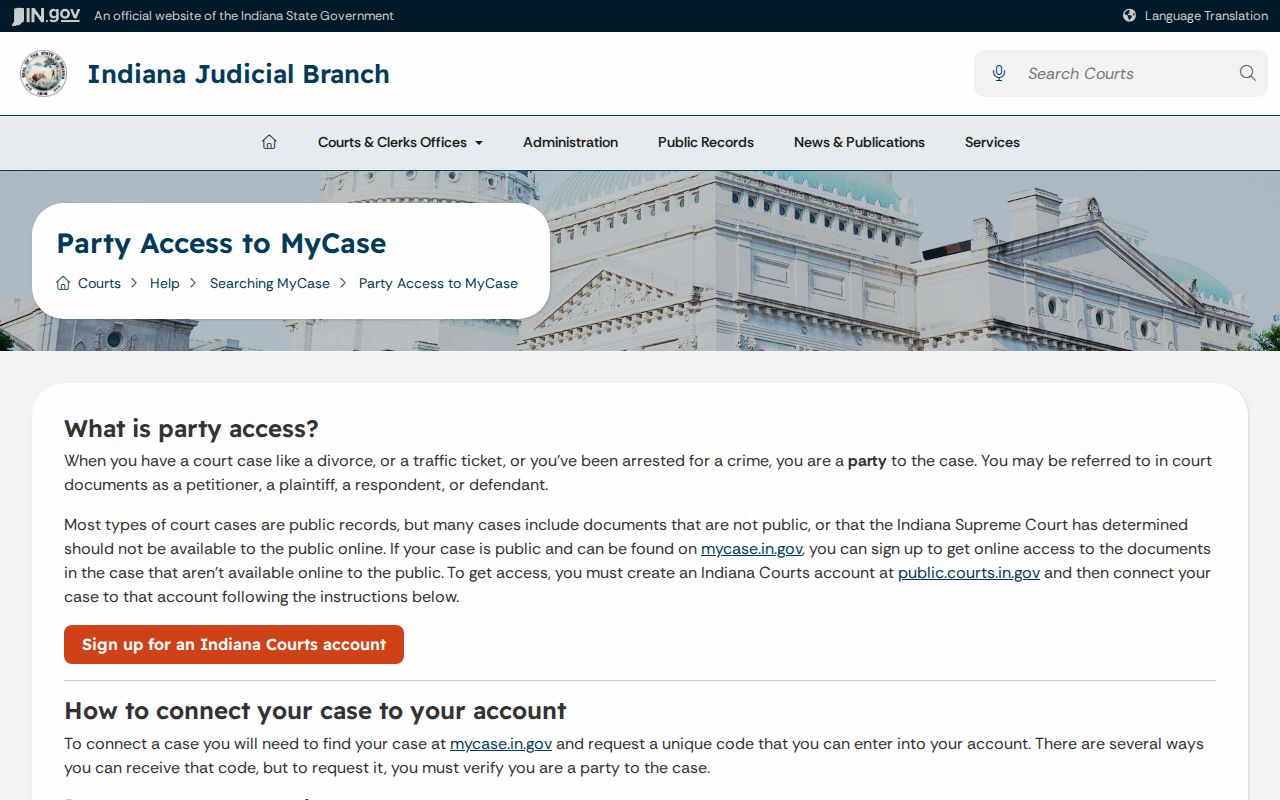
That official page drives home the point: party access is a separate lane. It does not unlock records barred by confidentiality rules.
Hearings on the Civil Docket
Civil hearings come in many forms. A setting might be a status conference, a motion hearing, a pretrial conference, a trial, or a family or probate matter. The newest CCS entry is the place to look. It carries the date, time, reason, session, judicial officer, and any cancellation note. Keep in mind that MyCase is a case history. It is not a guaranteed daily courtroom calendar for Sullivan County.
Sullivan's local rules demand specific information in certain motions to set or continue hearings. A motion to continue is only a request. It stays that way until an order or CCS result shows it was granted. When your date is near, confirm by phone or at the Clerk's counter. The public Trial Court Calendars system does not list Sullivan County in its live participant feed. So treat the CCS and Clerk route as the reliable one for a civil docket check.
Sullivan Filings and Protected Reports
A civil docket entry and the document behind it are two different things. MyCase posts some public civil orders and filings, though availability varies. A missing download icon could mean a few things. The document was never made remotely available. It may not have been scanned, or it may be restricted. Ask the Clerk about the request path and any copy or certification requirements. The general court-record access rule sets the baseline. It establishes accessibility unless another rule excludes the record from public court records.
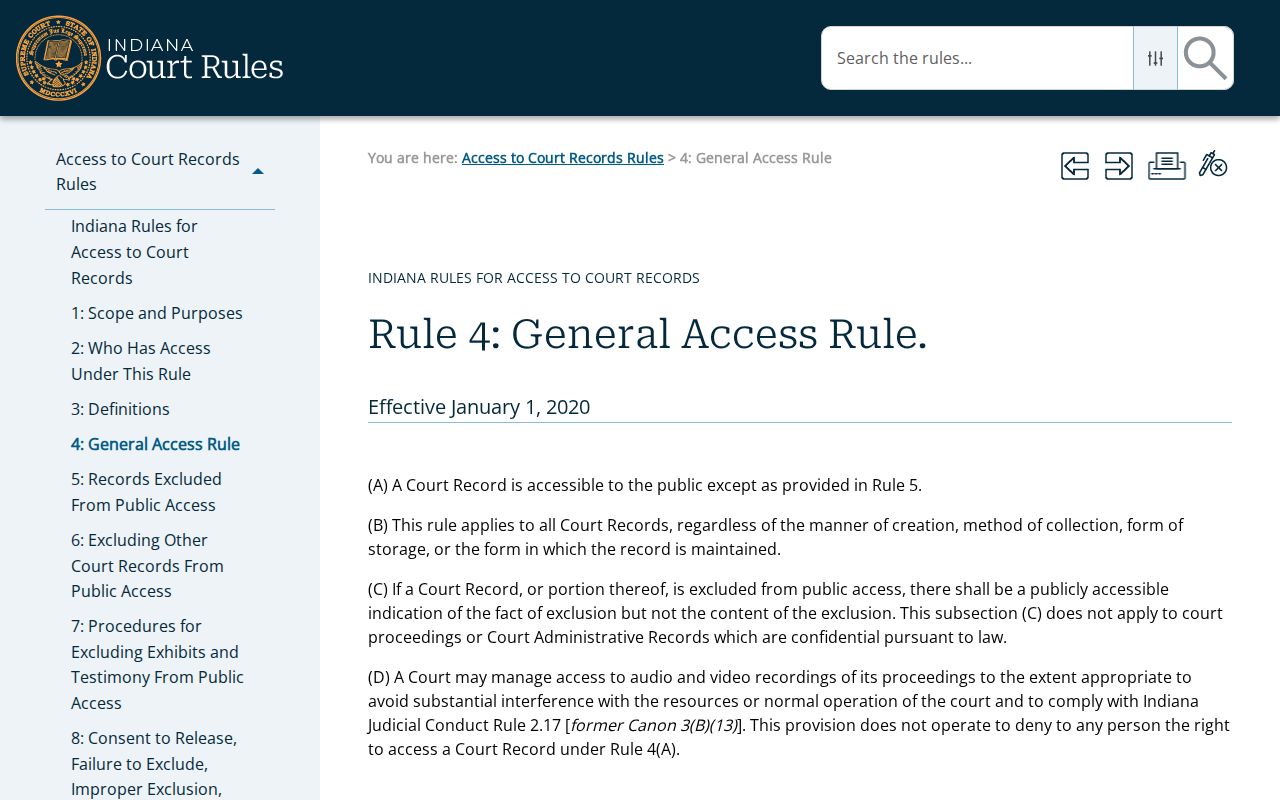
That baseline matters. It stops readers from assuming every filing is either fully open or fully closed. Rule 5 can exclude several kinds of material. Medical, mental-health, substance-use, privileged, sealed, and other protected categories qualify. Rule 6 adds a process for extraordinary court-ordered exclusion. Even so, the Sullivan County civil docket may still show that an event occurred.
Who Can See Civil Dockets
Indiana's current Rules on Access to Court Records govern civil case access. Rule 4 presumes access to accessible court records, while Rule 5 lists confidential cases, protected documents, and required redactions. The court-ordered exclusion rule describes the verified request and judicial findings needed for special exclusion.
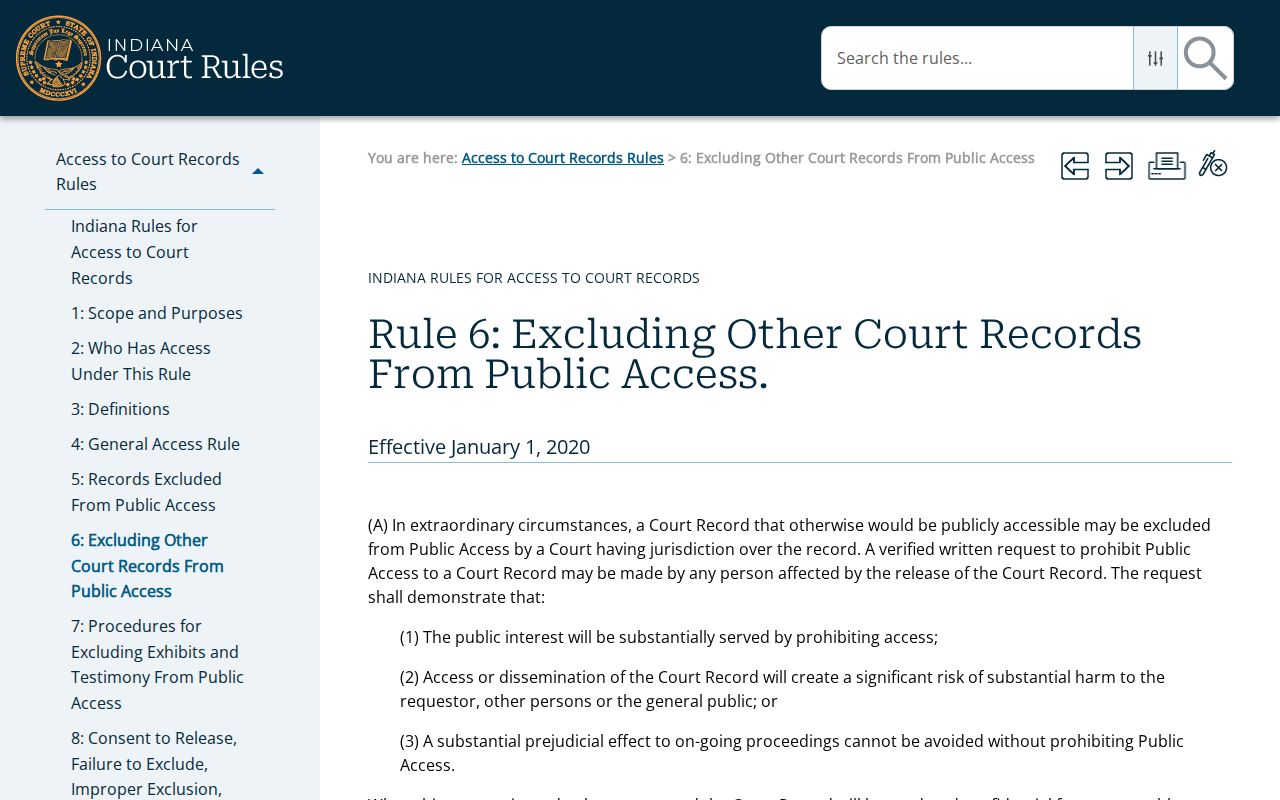
Exclusion is narrow and court-controlled. A casual removal request will not do.
Indiana APRA, IC 5-14-3, covers reasonably particular public-agency requests, but it cannot bypass court-record exclusions. The Indiana public-records statute supplies the agency-record framework that applies outside the courtroom's own rules.
A good request names the Sullivan court, the case number, the date range, and the exact document you want. That specificity still respects judicial confidentiality.
Access rule: A visible case header does not guarantee remote access to each report, exhibit, address, or filing. Ask the Clerk whether a missing item is restricted or available by direct request.
Public access does not turn on why you are asking. MyCase is built for human case lookup, not bulk harvesting. Rely on the Sullivan County Clerk's record. Use it for an official result, a certified copy, or a current financial balance. Note: Confirm a civil status, judgment, or hearing against the latest CCS entry. Never trust an older search result alone.
Sullivan Civil Filing Context
Certified 2024 trial-court data recorded 8,484 cases before all Sullivan County courts. New filings across all case types totaled 3,271. Dispositions came to 3,044. Sullivan Superior carried the larger share of the county total. That fits its exclusive small-claims work. It also matches its assigned concurrent cases.
These totals explain why a broad party-name search can get noisy fast. They say nothing about the time or likely result of one Sullivan County civil docket.